
Why acrylic can't be separated from the protective film "invisible armor"
From a piece of transparent sheet to high-end finished products, the protective film is the "lifeline" of acrylic to overcome the risks of the whole process and maintain perfect appearance. It not only solves the innate defects of materials, but also promotes the upgrading of the acrylic industry to high quality, high efficiency and high yield. With the continuous expansion of acrylic application scenarios, the special protective film has changed from "optional accessories" to "standard configuration", which has become a key support to protect the "plastic queen" and release the application value of materials.
Acrylic (PMMA) is known as the "Queen of Plastics". With more than 92% of high light transmittance, lightweight impact resistance, easy processing and molding, it has become the preferred transparent material for architectural decoration, advertising signs, consumer electronics, automobile interior decoration, home bathroom and other fields. However, this kind of bright material is born with "weakness". The whole process from production, processing to transportation, installation and use is very easy to lose value due to surface damage - professional protective film has become an indispensable standard configuration for acrylic products, which is the core need to protect its appearance and performance.
I. Natural "delicate": three major protective pain points of acrylic
The physical characteristics of acrylic materials determine its urgent need for comprehensive protection:
1. The surface hardness is low and easy to scratch.
The hardness of acrylic Mohs is only level 3-4 (far lower than glass level 5.5), and the hardness of the unhardened surface pencil is about 1-3H. Friction in daily handling, debris contact during processing, tool rubbing during installation, and even nails and dust particles can leave permanent scratches, directly destroying light transmission and aesthetics, resulting in the scrapping of finished products.
2. Strong static electricity, easy to adsorb dust and oil stains
The surface of acrylic is very easy to generate static electricity, forming a strong "adsorption effect". In production and transportation, dust, fluff and oil will be firmly attached to the plate surface, which is difficult to clean; if it is contaminated before screen printing, coating, spraying and other processes, impurities will be embedded in the coating, causing irreversible defects.
3. Weak chemical resistance and susceptibility to corrosion
Acrylic is sensitive to alcohol, acetone, acid and alkali detergents and other chemicals. After contact, it is prone to whiteness, atomization, cracking and other problems, and the protective film can form a chemical barrier to avoid the direct erosion of cleaning liquid, paint, coolant, etc.
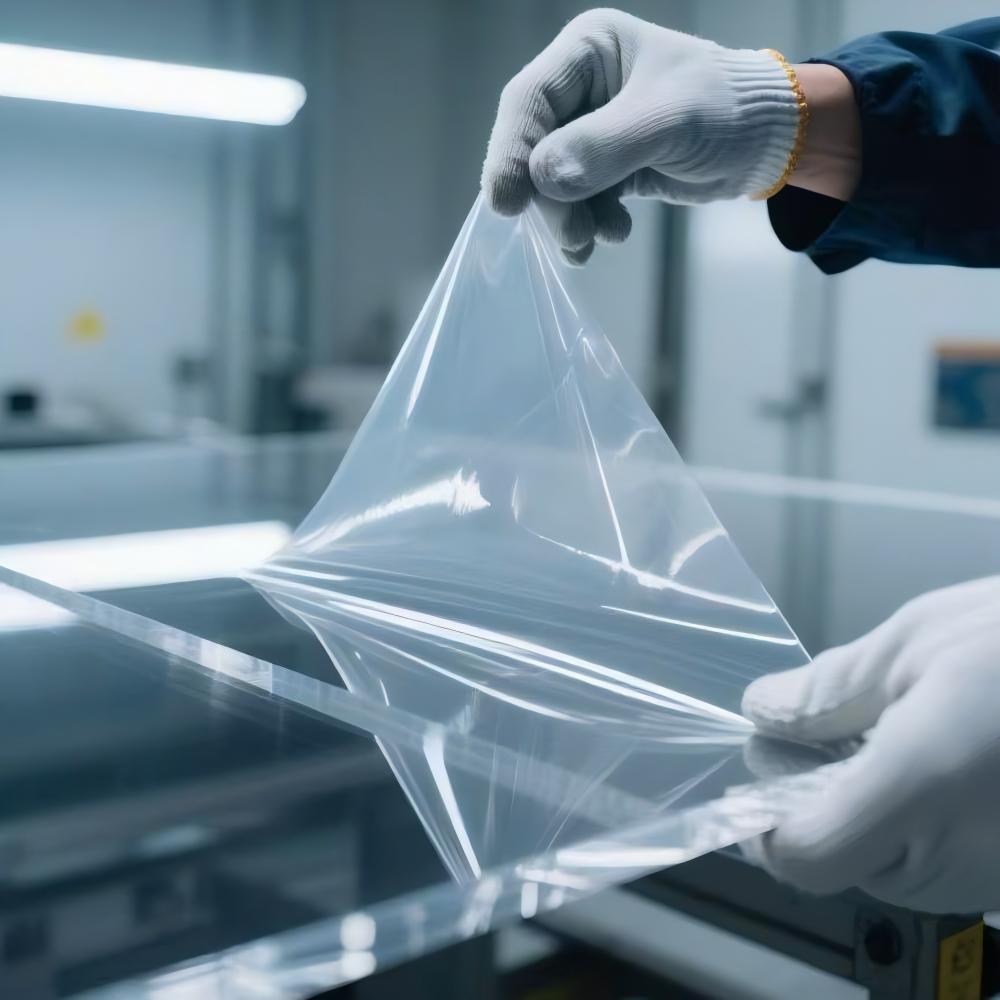
II. Full protection: the protective film covers the whole life cycle of acrylic
In view of the fragile characteristics of acrylic, the protective film builds a whole process protection system:
• Factory production link: the plate is immediately off the line to prevent friction scratches and dust pollution during stacking and storage, and maintain the original luster of the factory.
• Processing and manufacturing links: CNC cutting, fine carving, polishing, hot bending, screen printing, the protective film resists the impact of tools and debris, withstands short-term high temperature, and prevents processing damage and pollution.
• Transportation and warehousing link: resist bumps, friction, sun and rain in long-distance transportation, and avoid scraping and yellowing of the plate.
• Installation and construction link: when cutting, punching and fixing on site, protect the surface from tools, mortar and fingerprint pollution.
• Terminal use link: Some products keep the protective film in the hands of users to prevent accidental damage before sales, handling and installation, and easy to peel off after delivery.
III. Value Prominence: Industrial Upgrading Brought By Protective Film
Industry data shows that the use of special protective film adapted to acrylic can bring significant benefits:
• The yield is greatly improved: the surface defect rate is reduced by 80%-90%, and the qualification rate of finished products is increased from 85% to 98%.
• Significant cost reduction: reduce the cost of rework, scrapping and cleaning, and reduce the comprehensive production cost by more than 20%.
• Comprehensive efficiency improvement: After applying the film, it can be roughly operated without excessive handling, and the efficiency of processing, handling and installation is improved by 30%.
• Quality maintenance for a long time: no residual glue, no photo, no corrosion after peeling, and the plate surface remains as transparent as new.
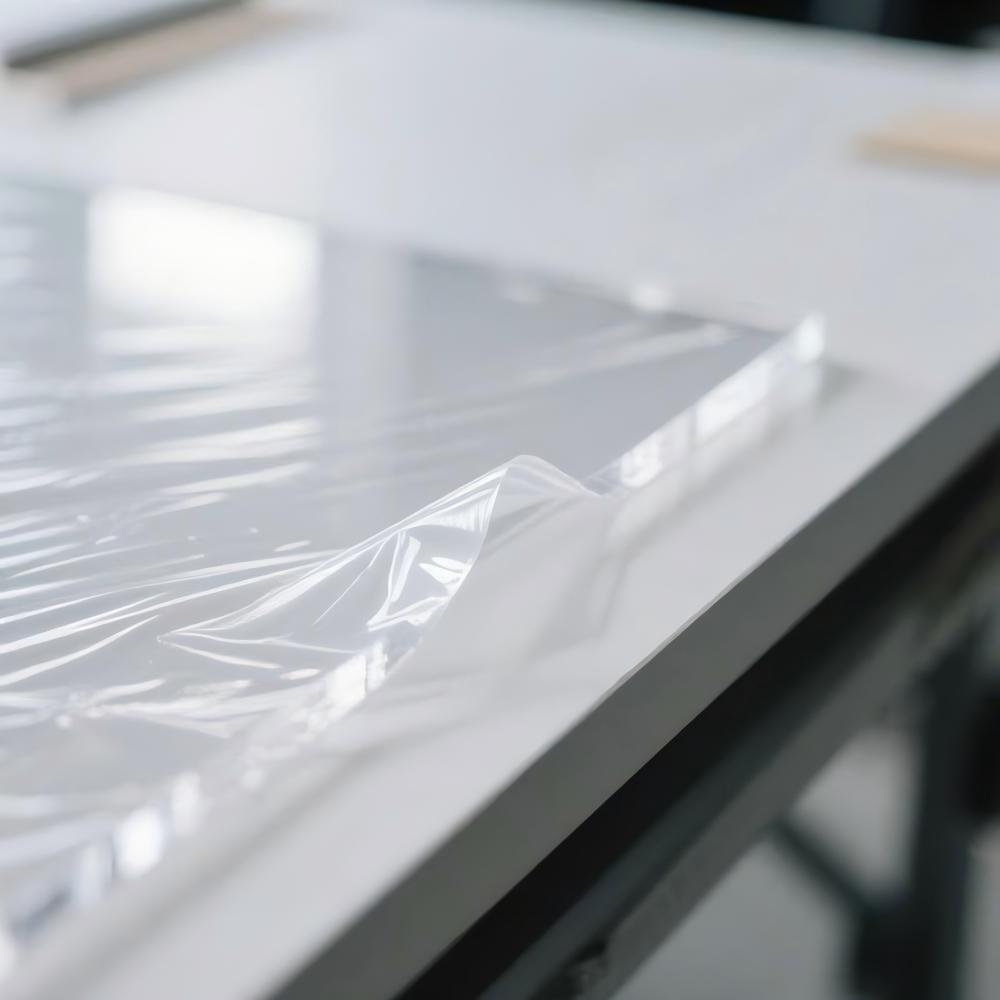
IV. Technical advancement: acrylic special protective film becomes the industry standard
With the high-end application of acrylic, the special protective film technology continues to be upgraded:
• Low viscosity and high peeling: gradient viscosity design, suitable for different surfaces such as polishing, sanding, hardening, etc., firm fit, easy to tear and no residue.
• Anti-static function: suppresses the generation of static electricity, reduces the dust adsorption rate by 90%, and adapts to high-clean scenes such as electronics and optics.
• Temperature-resistant and weather-resistant: can withstand 120-180℃ baking and outdoor sun exposure, long-term storage does not turn yellow and does not deglute.
• High transparency level: light transmittance >90%, haze <1%, does not affect the visual effect of acrylic.